

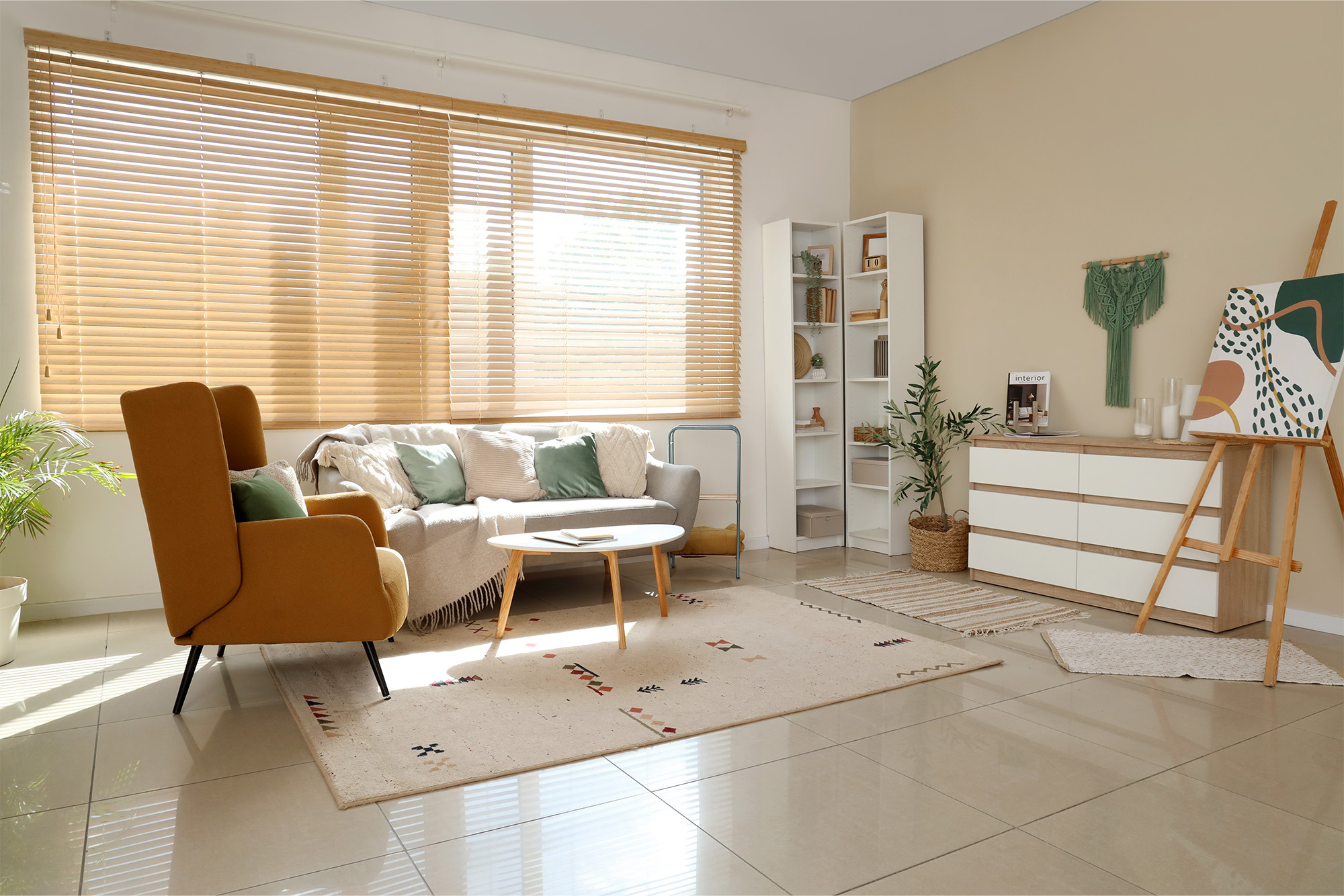
Designing a compact room often presents spatial challenges, particularly when choosing floor finishes. A common assumption is that small rooms require small tiles to stay in proportion. Interior design principles show that large-format tiles—typically defined as tiles with at least one side measuring 15 inches or greater—are actually one of the most effective tools for making a small room feel significantly larger.
Understanding the Optical Illusion of Scale
Small tiles create a dense grid pattern on the floor due to the high volume of grout lines required to fill the space. This dense grid fragments the floor plane visually, making the room feel busy and restricted. Large-format tiles cover more surface area per piece, drastically reducing the total number of grid lines. With fewer visual breaks, the eye sweeps across the surface without interruption, creating an immediate optical illusion of greater square footage.
The Impact of Fewer Grout Lines
Grout lines naturally break up a floor surface into separate geometric shapes. By using large tiles—such as 12x24, 24x24, or even 24x48 inch slabs—you reduce the total feet of grout on your floor by a substantial percentage. Fewer visible joints yield a smooth, uninterrupted surface plane. This sleek expanse allows light to travel smoothly across the room, giving compact bathrooms, laundry rooms, and entryways a cleaner appearance.
Matching Grout and Tile Colors for Maximum Continuity
To maximize the expanding effect of large-format tiles, select a grout color that closely matches the dominant shade of the tile. When grout contrasts sharply with tile, it outlines every single plank or square, highlighting the floor's boundaries. When tile and grout tones blend smoothly together, the distinction between individual pieces fades away. This creates a monolithic, slate-like look that extends the visual boundary of the room toward the walls.
Choosing the Right Layout Pattern
The orientation of your tile placement influences how a room's proportions are perceived. Installing rectangular large-format tiles horizontally across a narrow room creates the illusion of added width. Placing them parallel to the longest wall draws the eye outward, making a short room feel deeper. A staggered brick pattern or offset layout adds subtle geometric interest while keeping the surface expansive and refined.
Ideal Applications Around the Home
Large-format tile is particularly effective in compact powder rooms, small master bathrooms, tight entry hallways, and modest kitchens. In wet areas like bathrooms, choosing a matte or subtly textured large-format tile provides suitable slip resistance underfoot while delivering the upscale look found in high-end spas.
Using large-format tiles is an intelligent layout strategy for expanding compact interiors visually. By minimizing clutter lines and optimizing scale, you transform small footprint rooms into bright, balanced living spaces.


